Lending-as-a-Service: The $2.4 Trillion Embedded Finance Opportunity
.png) EvenFi EN
EvenFi EN
10 min read
EN
EvenFi EN
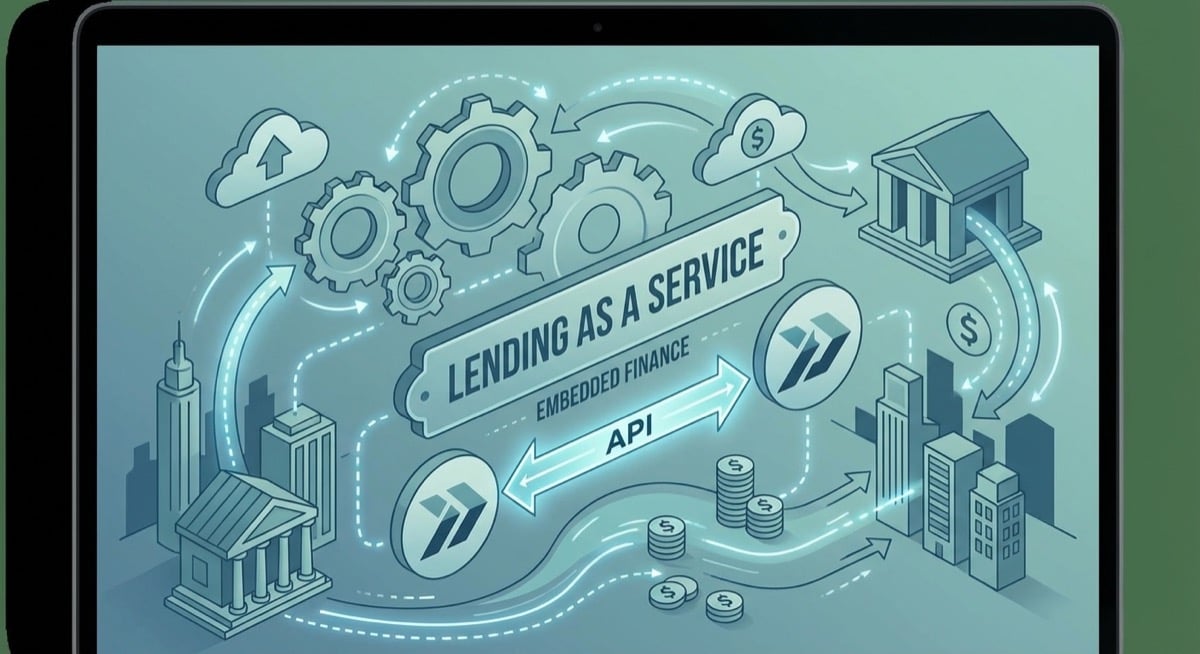
When Shopify launched Shopify Capital in 2016, the e-commerce platform wasn't trying to become a lender—they were solving a business problem. Their merchants needed working capital to grow, but traditional lending was slow, complex, and poorly aligned with e-commerce business models. By embedding lending directly into their platform, Shopify created a $2 billion lending business that seamlessly integrated with their merchants' daily operations.
Shopify's success illustrates the transformative potential of embedded lending, where credit services are integrated directly into non-financial platforms and workflows. Rather than requiring customers to visit separate lending institutions, embedded lending provides financing at the point of need, using contextual data to make faster, more accurate credit decisions.
The opportunity is enormous. According to research from BCG and QED Investors, the global embedded finance market will reach $606 billion by 2025, with lending representing the largest component at approximately $2.4 trillion in total addressable market. This growth is driven by the convergence of API-first infrastructure, real-time data analytics, and changing customer expectations about how financial services should be delivered.
For financial services companies, software platforms, and technology providers, embedded lending represents both a significant opportunity and a fundamental shift in how credit markets operate. Success requires understanding not just the technology requirements but also the business model implications and competitive dynamics of this emerging market.
Embedded lending creates value for all participants in ways that traditional lending models cannot match.
For End Customers: Embedded lending reduces friction, improves approval rates, and provides better customer experiences. Instead of separate applications, lengthy approval processes, and generic products, customers receive tailored financing options at the moment they need them. A small business ordering inventory can receive trade financing as part of the purchase process. An individual buying furniture can access point-of-sale financing without leaving the retailer's website.
For Platform Partners: Companies that embed lending create new revenue streams, improve customer retention, and enhance their value proposition. Platforms can monetize their customer relationships and data assets while providing additional value to their users. The lending functionality becomes a competitive differentiator that's difficult for competitors to replicate.
For Lending Providers: Embedded distribution provides access to new customer segments, reduces customer acquisition costs, and enables better risk assessment through contextual data. Instead of marketing to unknown prospects, lenders can serve pre-qualified customers who have demonstrated specific financing needs.
For Technology Platforms: Lending-as-a-Service (LaaS) providers enable this ecosystem by providing the infrastructure, compliance capabilities, and risk management tools that make embedded lending possible. They capture value through transaction fees, subscription revenues, and data monetization.
This multi-sided value creation explains why embedded lending has achieved such rapid adoption and why the market opportunity continues to expand.
The embedded lending market encompasses numerous use cases across different industries and customer segments, each with distinct characteristics and requirements.
E-commerce and Retail: Point-of-sale financing has become ubiquitous in online and offline retail environments. Companies like Klarna, Affirm, and Sezzle have built billion-dollar businesses providing embedded buy-now-pay-later (BNPL) solutions. The market has expanded beyond consumer purchases to include B2B procurement and supply chain financing.
Small Business Platforms: Software platforms serving small businesses have become major embedded lending providers. Square Capital, Intuit Capital, and PayPal Working Capital use platform data to provide fast, flexible financing to their business customers. These platforms can assess creditworthiness using transaction history, cash flow patterns, and business performance data.
Vertical SaaS: Industry-specific software platforms are increasingly embedding lending tailored to their sectors' specific needs. Construction software platforms provide contractor financing, healthcare platforms offer practice funding, and agricultural platforms provide seasonal crop financing.
Marketplace Lending: Online marketplaces are embedding lending to facilitate transactions between buyers and sellers. Platforms like Amazon provide seller financing, while real estate platforms offer bridge loans and renovation financing.
Transportation and Logistics: Uber and Lyft provide driver financing for vehicle purchases. Freight platforms offer factoring and cargo financing. These embedded solutions address industry-specific cash flow challenges.
Healthcare and Education: Platforms serving healthcare providers offer equipment financing and practice loans. Educational platforms provide student financing and institutional funding solutions.
Each vertical has unique data sources, risk characteristics, and regulatory requirements that influence embedded lending implementation approaches.
Building scalable Lending-as-a-Service platforms requires sophisticated technology architectures that can support multiple partners, various lending products, and complex regulatory requirements.
API-First Design: LaaS platforms must provide comprehensive APIs that enable seamless integration with partner platforms. These APIs must support everything from customer application processes to loan management and payment processing. The API design often determines the success or failure of embedded lending implementations.
Multi-Tenant Architecture: LaaS platforms typically serve multiple lending partners with different products, risk appetites, and operational requirements. The architecture must support this complexity while maintaining performance, security, and compliance across all tenants.
Real-Time Decision Engines: Embedded lending's value proposition depends on fast credit decisions, often within seconds. This requires sophisticated decision engines that can process multiple data sources, apply complex risk models, and return decisions in real-time while maintaining compliance with applicable regulations.
Data Integration and Analytics: Embedded lending success depends on accessing and analyzing contextual data from partner platforms. This includes transaction histories, behavioral data, business performance metrics, and external data sources. The platform must integrate these data sources while maintaining appropriate privacy and security controls.
Compliance and Risk Management: LaaS platforms must handle complex regulatory compliance across multiple jurisdictions and lending partners. This includes KYC/AML procedures, fair lending compliance, state licensing requirements, and consumer protection regulations.
Scalable Infrastructure: Embedded lending can generate enormous transaction volumes with unpredictable spikes. The underlying infrastructure must scale automatically while maintaining performance and availability standards appropriate for financial services.
Embedded lending enables new approaches to risk assessment that can improve both approval rates and loss performance compared to traditional lending models.
Contextual Data Advantage: Embedded lenders can access rich contextual data that traditional lenders cannot obtain. E-commerce platforms know customer purchase patterns, business software platforms understand cash flow cycles, and marketplace platforms can assess transaction quality and seller performance.
Real-Time Risk Assessment: Traditional lending relies on historical credit reports and financial statements. Embedded lending can assess risk using real-time data about customer behavior, business performance, and transaction patterns. This temporal advantage can identify both opportunities and risks that traditional models miss.
Behavioral Analytics: Platform data enables sophisticated behavioral analytics that can predict creditworthiness and default risk. Customer service interactions, platform usage patterns, and business operational data all provide risk-relevant signals.
Network Effects: Platforms can use network data to assess risk. The quality of a customer's counterparties, network position, and reputation within the platform ecosystem all provide risk-relevant information.
Dynamic Risk Management: Embedded lending enables continuous risk monitoring throughout the loan lifecycle. Changes in customer behavior, business performance, or platform activity can trigger risk management actions before traditional lending would detect problems.
These risk management advantages explain why many embedded lending providers achieve better loss rates than traditional lenders serving similar customer segments.
Embedded lending operates within complex regulatory frameworks that vary by jurisdiction, product type, and customer segment.
Lending Regulations: Embedded lending must comply with all applicable lending regulations, including interest rate caps, disclosure requirements, and fair lending obligations. The embedding platform and lending provider must coordinate to ensure complete compliance.
Partnership Regulations: Regulatory authorities increasingly scrutinize partnerships between fintech companies and traditional financial institutions. Embedded lending arrangements must be structured to meet regulatory expectations about risk management, oversight, and compliance.
Consumer Protection: Consumer lending embedded in retail or e-commerce environments faces particular scrutiny regarding disclosures, marketing practices, and customer protection. Regulators want to ensure that financing options are presented clearly and that customers understand their obligations.
Data Privacy: Embedded lending involves sharing customer data between platforms and lending providers. These arrangements must comply with applicable data protection regulations while enabling effective risk assessment and loan management.
Cross-Border Complexity: Many embedded lending arrangements involve multiple jurisdictions, creating complex compliance requirements. A US-based platform embedding lending for European customers may need to comply with both US and EU regulations.
Embedded lending business models vary significantly based on participant roles, risk allocation, and revenue sharing arrangements.
Revenue Sharing Models: Many embedded lending partnerships use revenue sharing where the platform partner receives a percentage of interest income or fees generated by loans. This aligns incentives but requires sophisticated revenue tracking and reporting systems.
Referral Fee Models: Some arrangements pay platform partners referral fees for successful loan originations. This model provides predictable partner compensation but may not align incentives for loan performance.
SaaS Subscription Models: Technology providers often charge subscription fees for access to lending infrastructure and compliance capabilities. This model provides predictable revenue but may limit adoption among smaller partners.
Transaction Fee Models: Some LaaS providers charge per-transaction fees that scale with loan volume. This model aligns provider incentives with partner success but can become expensive at scale.
Risk Participation Models: Advanced partnerships may involve risk sharing where platform partners participate in loan performance. This maximizes alignment but requires sophisticated risk management capabilities from platform partners.
The choice of business model significantly affects partnership dynamics, economic incentives, and long-term sustainability.
The embedded lending market is evolving rapidly with new entrants, changing competitive dynamics, and ongoing consolidation.
Big Tech Expansion: Amazon, Google, and Apple are expanding their embedded lending capabilities, leveraging their platform positions and customer relationships. Their entry is forcing traditional players to enhance their offerings and differentiation strategies.
Traditional Bank Response: Traditional banks are developing embedded lending capabilities to compete with fintech challengers. JPMorgan Chase, Bank of America, and others are partnering with platforms to provide embedded lending solutions.
Fintech Specialization: Fintech companies are increasingly specializing in specific verticals or use cases within embedded lending. This specialization enables better product-market fit but may limit scalability.
Infrastructure Consolidation: The embedded lending infrastructure market is consolidating as platforms seek comprehensive solutions rather than managing multiple vendors. This creates opportunities for full-stack providers while challenging point solution providers.
Regulatory Evolution: Evolving regulations are shaping competitive dynamics by favoring compliant, well-capitalized providers while creating barriers for smaller players.
Successful embedded lending implementation requires careful planning and execution across multiple dimensions.
Partner Selection: Choosing the right platform partners is critical for embedded lending success. Partners should have strong customer relationships, relevant data assets, and commitment to the embedded lending value proposition.
Product Design: Embedded lending products must be tailored to specific use cases and customer needs. Generic lending products rarely succeed in embedded environments where context and relevance are critical.
Integration Planning: Technical integration between platforms and lending providers must be carefully planned to ensure seamless customer experiences and operational efficiency.
Risk Management Setup: Risk models and operational procedures must be adapted for embedded lending environments, taking advantage of contextual data while managing new risk categories.
Regulatory Preparation: Compliance frameworks must be established before launch to ensure all regulatory requirements are met across all jurisdictions and product types.
Performance Monitoring: Embedded lending requires sophisticated monitoring and analytics to track performance, identify issues, and optimize outcomes across all participants.
CoreFi's Lending-as-a-Service capabilities provide comprehensive infrastructure for embedded lending implementations. Our platform addresses the technical, regulatory, and operational requirements for successful embedded lending while maintaining the flexibility needed for diverse use cases and partnership models.
Our approach includes:
Comprehensive API Suite: Complete APIs for loan origination, servicing, payments, and reporting that enable seamless platform integration.
Multi-Product Support: Native support for various lending products including installment loans, lines of credit, buy-now-pay-later, and business financing solutions.
Advanced Risk Analytics: Sophisticated risk assessment capabilities that can incorporate platform data and external data sources for enhanced decision-making.
Full Compliance Framework: Complete regulatory compliance capabilities covering consumer lending, commercial lending, and cross-border requirements.
Flexible Partnership Models: Support for various business models and revenue sharing arrangements to accommodate different partnership structures.
Our clients can focus on their core business while leveraging our lending infrastructure to create embedded financing solutions for their customers.
Embedded lending represents a fundamental shift in how credit markets operate, with strategic implications for all participants.
For traditional financial institutions, embedded lending creates both threats and opportunities. Those that embrace platform partnerships and develop embedded capabilities will capture new markets and distribution channels. Those that resist will lose market share to more agile competitors.
For technology platforms, embedded lending offers significant value creation opportunities but requires substantial compliance and risk management investments. Success depends on choosing the right lending partners and implementation approaches.
For technology providers, the embedded lending opportunity is enormous but highly competitive. Success requires comprehensive capabilities, strong regulatory expertise, and the ability to serve diverse customer needs.
The embedded lending market will continue to evolve rapidly, driven by technological advancement, regulatory changes, and changing customer expectations. The companies that succeed will be those that understand embedded lending as a business model transformation, not just a technology implementation.
---
Embedded lending isn't just about integrating financing into software platforms—it's about fundamentally reimagining how credit markets connect with customer needs and business workflows.

EvenFi completes pan-European expansion to 30 EEA countries under ECSP regulation. Crowdfunding infrastructure now avail...

Comprehensive analysis of EU crowdfunding lending in 2026: 254 ECSP-licensed platforms, French market rebound to €1.76...

Growing fintech infrastructure challenges and platform consolidation strategies. When to migrate from initial systems an...