Cross-Border Financial Services: Multi-Jurisdictional Compliance Guide 2026
.png) EvenFi EN
EvenFi EN
9 min read
EN
EvenFi EN
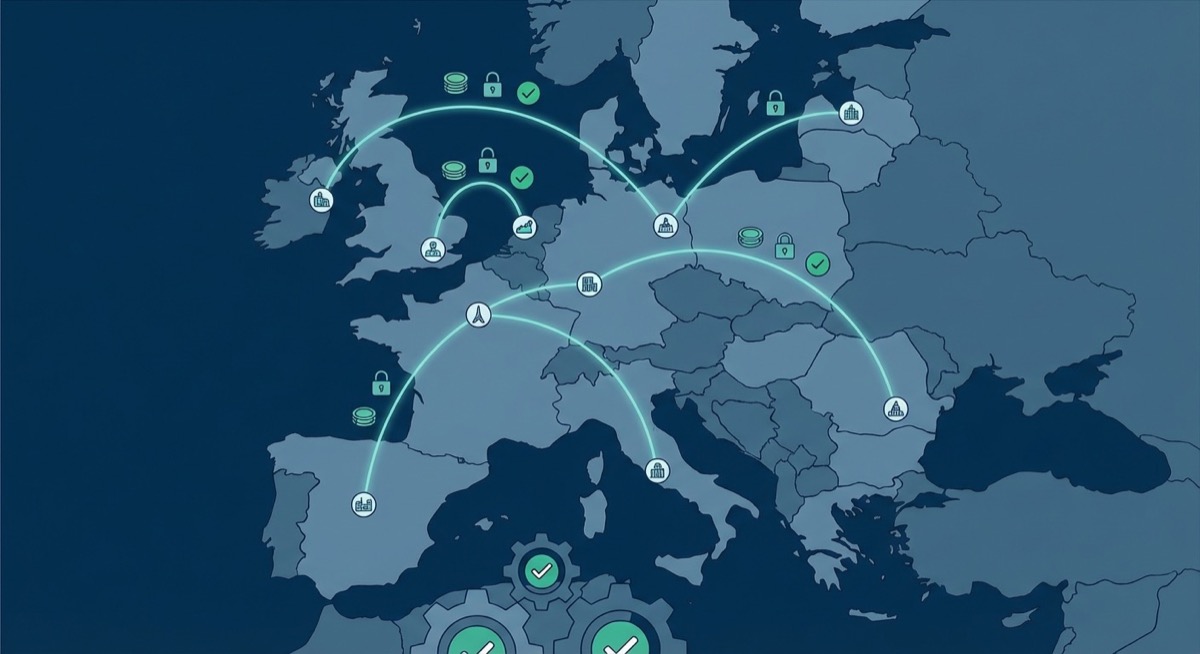
When Klarna announced its European expansion strategy in 2024, the company's leadership estimated that regulatory compliance would account for approximately 30% of their international expansion costs. Eighteen months later, that figure has proven optimistic. The reality of operating across multiple European jurisdictions has revealed compliance complexities that even experienced fintech companies underestimated.
Klarna's experience reflects a broader challenge facing financial services companies in 2026. While European integration has created a single market in theory, the practical reality of cross-border financial services remains extraordinarily complex. Despite decades of harmonization efforts, significant regulatory differences persist across jurisdictions, creating compliance challenges that can make or break expansion strategies.
The promise of "passporting" rights—the ability to provide financial services across the EU based on home country authorization—has been only partially realized. While regulatory barriers to market entry have been reduced, operational barriers remain significant. Companies discover that compliance success requires deep understanding of local regulatory cultures, enforcement patterns, and practical implementation requirements that extend far beyond harmonized legal frameworks.
European financial services regulation presents what we call the "harmonization paradox." At the macro level, regulations appear increasingly harmonized through directives like PSD2, GDPR, and the ECSP regulation. However, at the operational level, implementation differences create significant complexity for multi-jurisdictional operators.
Consider the European Crowdfunding Service Providers (ECSP) Regulation, which was specifically designed to create a single European market for crowdfunding services. Despite this harmonization effort, practical implementation varies significantly across member states:
National Competent Authorities: Different national regulators interpret ECSP requirements differently, creating varying expectations for license applications, ongoing supervision, and compliance monitoring. What satisfies regulators in one jurisdiction may be insufficient in another.
Local Implementation Rules: Member states retain discretion to implement additional requirements in certain areas. These local rules can significantly affect operational requirements, even for services covered by harmonized European regulations.
Enforcement Patterns: Regulatory enforcement varies substantially across jurisdictions. Some regulators emphasize formal compliance with written requirements, while others focus on outcomes and consumer protection. These different approaches require different compliance strategies.
Cultural Expectations: Regulatory cultures vary significantly across European jurisdictions. Scandinavian regulators often prefer collaborative, outcome-focused approaches, while German regulators typically emphasize detailed, process-oriented compliance. French regulators balance formal requirements with pragmatic implementation considerations.
Data protection and localization requirements create some of the most complex challenges for cross-border financial services. While GDPR provides a harmonized framework for data protection across the EU, practical implementation requirements vary significantly.
Data Residency Requirements: Some jurisdictions impose specific requirements about where customer data can be stored and processed. These requirements may conflict with cloud service architectures that distribute data across multiple locations for performance and resilience reasons.
Cross-Border Data Flows: Financial services often require real-time data sharing for fraud detection, risk management, and regulatory reporting. Managing these data flows while complying with various national requirements creates significant technical and operational complexity.
Third-Country Data Transfers: Serving European customers while using third-country service providers (particularly US cloud services) requires careful navigation of data transfer mechanisms like adequacy decisions and Standard Contractual Clauses.
Regulatory Access Rights: Different national authorities may require different levels of access to customer data for supervision and examination purposes. Designing systems that accommodate these varying requirements while maintaining security and privacy is challenging.
Despite numerous harmonization efforts, anti-money laundering (AML) compliance remains one of the most complex aspects of cross-border financial services. While the EU's Anti-Money Laundering Directives provide a common framework, implementation differences create significant operational challenges.
Customer Due Diligence Standards: Different jurisdictions interpret CDD requirements differently, particularly for politically exposed persons (PEPs), beneficial ownership identification, and ongoing monitoring obligations. What constitutes adequate due diligence in one country may be insufficient in another.
Suspicious Activity Reporting: SAR/STR reporting requirements vary significantly across jurisdictions in terms of thresholds, timing, and reporting formats. Financial institutions must maintain separate reporting procedures for each jurisdiction where they operate.
Sanctions Screening: While EU sanctions are harmonized, many member states maintain additional national sanctions lists. Cross-border operators must screen against multiple sanctions regimes simultaneously.
Record Keeping Requirements: AML record keeping requirements vary in terms of retention periods, storage locations, and accessibility requirements for authorities. These differences affect system design and data management strategies.
Successfully operating across multiple jurisdictions requires technology architectures specifically designed for regulatory complexity. Traditional approaches that work well for single-jurisdiction operators often prove inadequate for cross-border services.
Jurisdictional Data Modeling: Systems must be designed to handle different regulatory requirements for similar business processes across jurisdictions. This includes different data collection requirements, retention periods, and reporting formats.
Configurable Compliance Workflows: Compliance processes must be configurable by jurisdiction while maintaining operational efficiency and consistency. This requires sophisticated workflow engines that can adapt business processes to local requirements.
Multi-Regulatory Reporting: Systems must support multiple regulatory reporting formats and schedules simultaneously. This includes not only different data formats but also different calculation methodologies and validation rules.
Audit Trail Management: Different jurisdictions have different audit trail and record keeping requirements. Systems must maintain appropriate documentation and history for each jurisdiction's specific needs.
One of the most important strategic decisions for cross-border financial services is the choice between subsidiary and branch structures for international expansion. This decision has profound implications for regulatory compliance, operational complexity, and business flexibility.
Subsidiary Structures provide operational flexibility and risk isolation but require full regulatory authorization in each jurisdiction. Subsidiaries must maintain local capital, governance structures, and compliance capabilities. This approach provides maximum regulatory comfort for local authorities but increases operational complexity and costs.
Branch Structures leverage home country authorization through passporting rights, reducing regulatory authorization requirements. However, branches may face limitations on services they can provide and must still comply with local conduct of business rules.
Hybrid Approaches combine subsidiary and branch structures across different jurisdictions based on local requirements and business priorities. This approach optimizes regulatory efficiency while maintaining operational flexibility but increases management complexity.
The choice often depends on specific business models, target markets, and regulatory requirements. Financial services companies must evaluate these factors carefully for each target jurisdiction.
Successful cross-border financial services require sophisticated regulatory relationship management capabilities. Managing relationships with multiple regulators simultaneously creates unique challenges and opportunities.
Coordinated Communication: Issues that affect multiple jurisdictions must be communicated effectively to all relevant authorities. This requires understanding different regulatory communication preferences and coordination to avoid conflicting messages.
Incident Management: Operational incidents often affect multiple jurisdictions simultaneously but may require different response approaches based on local regulatory expectations. Effective incident management requires pre-planned communication strategies and clear escalation procedures.
Regulatory Change Management: Regulatory changes in one jurisdiction may affect operations in others, particularly when shared technology platforms or processes are involved. Organizations need capabilities to assess cross-jurisdictional impacts of regulatory changes.
Examination Coordination: Multi-jurisdictional operators may face simultaneous examinations by different regulators. Coordinating these activities while maintaining regulatory relationships requires sophisticated project management and communication capabilities.
The complexity of multi-jurisdictional compliance makes technology partner selection particularly critical for cross-border financial services. Organizations need partners who understand not just the technical requirements but also the practical challenges of operating across multiple regulatory regimes.
Regulatory Expertise: Technology partners should demonstrate deep understanding of regulatory requirements across target jurisdictions, not just theoretical knowledge of harmonized rules but practical experience with implementation differences.
Architectural Flexibility: Platform architectures must support jurisdiction-specific configurations without compromising operational efficiency or system integrity. This requires sophisticated design approaches that many technology vendors haven't mastered.
Ongoing Regulatory Support: Regulatory requirements change frequently across multiple jurisdictions. Technology partners must provide ongoing support for regulatory updates, not just initial implementation assistance.
Multi-Jurisdictional Experience: Partners with actual experience operating across multiple jurisdictions bring valuable insights about practical challenges that aren't apparent from single-jurisdiction operations.
EvenFi's expansion from Italy to Spain through our CNMV-licensed subsidiary provides practical insights into multi-jurisdictional compliance challenges. Despite operating under the same ECSP regulation in both countries, we discovered significant implementation differences that affected our operational approaches.
Our experience highlights the importance of local regulatory expertise and the value of technology platforms designed for multi-jurisdictional operation. CoreFi's architecture was specifically designed to support different regulatory requirements across jurisdictions while maintaining operational efficiency.
This experience informs our approach to serving clients with cross-border ambitions. We understand the practical challenges of multi-jurisdictional compliance because we've lived through them ourselves.
Organizations considering cross-border financial services expansion should evaluate several strategic factors:
Market Prioritization: Not all European markets present equal opportunities or challenges. Organizations should prioritize markets based on business potential, regulatory complexity, and strategic fit with their capabilities.
Regulatory Strategy: The choice between subsidiary and branch structures should align with long-term business strategy, not just immediate cost considerations. Different structures provide different strategic options and constraints.
Technology Architecture: Technology platforms must be selected with multi-jurisdictional requirements in mind from the beginning. Retrofitting single-jurisdiction systems for multi-jurisdictional operation is expensive and often ineffective.
Organizational Capabilities: Multi-jurisdictional compliance requires specialized capabilities in regulatory analysis, relationship management, and operational coordination. Organizations must develop or acquire these capabilities.
Partner Selection: Technology and service partners should be evaluated based on multi-jurisdictional experience and capabilities, not just single-jurisdiction expertise.
European financial services integration continues to evolve, with new initiatives aimed at reducing barriers to cross-border services. The Capital Markets Union project, Digital Finance Package, and various harmonization efforts will likely reduce some current complexities over time.
However, the fundamental challenges of operating across multiple jurisdictions will remain. Different legal traditions, regulatory cultures, and market structures ensure that cross-border financial services will continue to require sophisticated compliance approaches.
Organizations that develop strong multi-jurisdictional compliance capabilities now will be well-positioned to capitalize on future integration efforts. Those that struggle with current requirements may find future expansion opportunities difficult to capture.
The key is building compliance capabilities that are both robust enough to handle current complexity and flexible enough to adapt to future changes. This requires strategic thinking about technology architecture, organizational design, and partner relationships.
---
Cross-border financial services success requires understanding that regulatory harmonization is a process, not a destination. Build compliance capabilities that can navigate current complexity while adapting to future integration efforts.

EvenFi completes pan-European expansion to 30 EEA countries under ECSP regulation. Crowdfunding infrastructure now avail...

Comprehensive analysis of EU crowdfunding lending in 2026: 254 ECSP-licensed platforms, French market rebound to €1.76...

Growing fintech infrastructure challenges and platform consolidation strategies. When to migrate from initial systems an...