Asset Tokenization in Traditional Finance: Real Use Cases Beyond Crypto Hype
.png) EvenFi EN
EvenFi EN
9 min read
EN
EvenFi EN
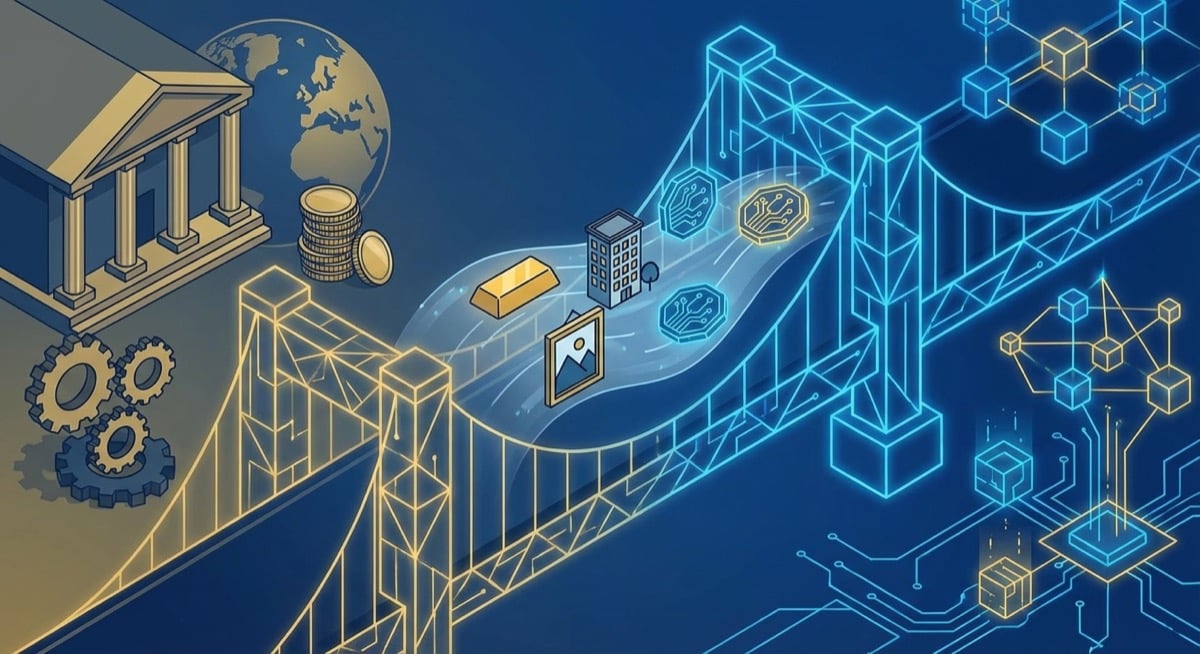
In October 2024, BlackRock's tokenized money market fund, BUIDL, crossed $1 billion in assets under management, becoming the largest tokenized fund in traditional finance. The milestone marked a turning point in how institutional investors view asset tokenization—not as a speculative crypto experiment, but as a practical tool for improving operational efficiency and market access.
The success of BUIDL, along with similar initiatives from Franklin Templeton, JPMorgan, and Goldman Sachs, demonstrates that asset tokenization has evolved far beyond its cryptocurrency origins. Today's tokenization projects focus on solving real business problems in traditional finance: improving settlement efficiency, enabling fractional ownership, reducing operational costs, and creating new distribution channels.
However, the path from crypto hype to practical implementation has been neither straight nor easy. Early tokenization projects often failed because they prioritized technological novelty over business value. The projects succeeding today are those that start with specific business problems and use tokenization as one tool among many to solve them.
For financial services executives evaluating tokenization opportunities, the key question isn't whether blockchain technology is revolutionary—it's whether tokenization can solve specific business challenges better than existing alternatives.
The most successful tokenization projects treat blockchain as infrastructure rather than innovation. Like databases, APIs, or payment networks, blockchain technology becomes valuable when it enables better business outcomes, not when it demonstrates technological sophistication.
Settlement Efficiency: Traditional asset trading involves multiple intermediaries, lengthy settlement periods, and complex reconciliation processes. Tokenized assets can settle in minutes rather than days, reducing counterparty risk and capital requirements. This efficiency gain has measurable economic value that justifies implementation complexity.
Operational Standardization: Asset tokenization requires standardized data formats, smart contract templates, and operational procedures. This standardization can reduce operational complexity and costs across entire asset classes, even when blockchain technology itself provides modest benefits.
Audit and Compliance: Blockchain's immutable transaction history provides comprehensive audit trails that can reduce regulatory reporting costs and improve compliance monitoring. These operational benefits often exceed the value of other blockchain features.
Global Accessibility: Tokenized assets can be traded 24/7 across global markets without traditional banking intermediaries. This accessibility can expand investor bases and improve liquidity for previously illiquid assets.
The key insight is that tokenization's value comes from solving specific business problems, not from using blockchain technology.
Real estate tokenization has emerged as the most mature and successful application of asset tokenization in traditional finance. The reasons are straightforward: real estate's high transaction costs, illiquidity, and fractional ownership challenges align perfectly with tokenization's capabilities.
Fractional Ownership at Scale: Traditional real estate syndications require complex legal structures and high minimum investments. Tokenization enables fractional ownership with lower barriers to entry and more efficient ownership transfer mechanisms. A $50 million commercial property can be divided into 50,000 tokens, each representing $1,000 of ownership.
Liquidity Enhancement: Real estate investments traditionally require multi-year holding periods with limited exit options. Tokenized real estate can provide secondary market liquidity, allowing investors to exit positions before property disposal. This liquidity premium can reduce required returns and increase property values.
Geographic Expansion: Tokenization enables cross-border real estate investment with reduced regulatory and operational friction. European investors can participate in US real estate projects, and vice versa, through standardized tokenized structures.
Operational Efficiency: Property management, rent distribution, and investor reporting can be automated through smart contracts, reducing operational costs and improving transparency. Rental income can be distributed automatically to token holders based on their ownership percentage.
Several platforms have demonstrated real estate tokenization's commercial viability. RealT has tokenized over $50 million in US real estate with fully automated rental distributions. European platforms like Fundrise Europe and Property Partner have achieved similar success with tokenized property investments.
Private equity and alternative asset management represent another significant opportunity for tokenization, though implementation challenges are more complex than real estate.
Fund Administration Efficiency: Traditional private equity funds require extensive administrative infrastructure for investor onboarding, capital calls, distribution management, and regulatory reporting. Tokenization can automate many of these functions through smart contracts, reducing administrative costs and improving investor experience.
Secondary Market Creation: Private equity investments traditionally have no secondary market liquidity. Tokenization can enable secondary trading of fund interests, providing liquidity to investors and potentially reducing required returns for fund investments.
Fractional Access: High minimum investments in private equity funds exclude many qualified investors. Tokenization can reduce minimum investments and enable broader participation in alternative asset classes.
Cross-Border Distribution: International private equity fund distribution involves complex regulatory compliance and operational challenges. Tokenized fund shares can simplify cross-border distribution while maintaining regulatory compliance.
The challenges in private equity tokenization are significant. Fund structures are complex, regulatory requirements are extensive, and investor expectations for personalized service are high. However, several fund managers are piloting tokenization approaches that address these challenges while preserving the benefits of traditional fund structures.
Fixed income markets represent perhaps the largest opportunity for asset tokenization, given the size and operational complexity of global debt markets.
Bond Issuance and Settlement: Traditional bond issuance involves multiple intermediaries and settlement periods measured in days. Tokenized bonds can be issued and settled directly, reducing costs and settlement risk. The European Investment Bank's successful €100 million digital bond issuance demonstrates this approach's viability.
Corporate Debt Tokenization: Corporate bonds and loans can be tokenized to enable fractional ownership and secondary trading. This approach can improve liquidity for corporate debt and enable new distribution channels for debt issuances.
Supply Chain Finance: Trade finance and supply chain financing instruments can be tokenized to improve transparency, reduce fraud risk, and enable secondary trading. Several banks are piloting tokenized letters of credit and trade finance facilities.
Structured Products: Complex structured products can benefit from tokenization's transparency and programmability. Smart contracts can automate complex payout calculations and ensure accurate implementation of structured product terms.
The debt tokenization opportunity is enormous, but implementation requires careful attention to regulatory compliance, market infrastructure integration, and investor protection requirements.
Asset tokenization operates within existing financial services regulatory frameworks, requiring careful attention to securities law, anti-money laundering requirements, and investor protection rules.
Securities Regulation: Tokenized assets are generally subject to securities regulation in the jurisdictions where they are offered. This includes registration requirements, disclosure obligations, and ongoing compliance with securities laws. The regulatory treatment varies significantly by asset type and jurisdiction.
AML and KYC Requirements: Tokenization platforms must implement comprehensive AML and KYC procedures that comply with relevant jurisdictions' requirements. The pseudonymous nature of blockchain transactions creates additional compliance challenges that must be addressed through platform design.
Investor Protection: Retail investor participation in tokenized assets requires appropriate investor protection measures, including risk disclosures, appropriateness assessments, and ongoing monitoring. These requirements vary by jurisdiction and investor type.
Cross-Border Compliance: Tokenization's global accessibility creates complex cross-border compliance requirements. Platforms must ensure compliance with all relevant jurisdictions' laws, not just their home country requirements.
Successful tokenization projects prioritize regulatory compliance from the beginning rather than treating it as an afterthought.
Implementing asset tokenization requires sophisticated technology infrastructure that goes far beyond basic blockchain functionality.
Enterprise Blockchain Platforms: Production tokenization requires enterprise-grade blockchain infrastructure with appropriate scalability, security, and reliability characteristics. Public blockchains like Ethereum may not meet enterprise requirements for performance and compliance.
Smart Contract Development: Tokenization requires sophisticated smart contract development capabilities that accurately implement complex financial instrument terms. This includes extensive testing, auditing, and version management procedures.
Integration with Traditional Systems: Tokenization platforms must integrate with existing financial market infrastructure including custody systems, trading platforms, and regulatory reporting systems. These integrations are often more complex than the blockchain implementation itself.
Security and Risk Management: Tokenized assets require comprehensive security measures including key management, access controls, and incident response procedures. The immutable nature of blockchain transactions makes security particularly critical.
User Experience: Successful tokenization requires user-friendly interfaces that abstract blockchain complexity while providing appropriate transparency and control for sophisticated investors.
The business case for asset tokenization must be evaluated based on specific economic benefits rather than general technological advantages.
Cost Reduction: Tokenization can reduce transaction costs, administrative expenses, and operational overhead. These cost savings must be quantified and compared to implementation and ongoing operational costs.
Revenue Enhancement: Tokenization can create new revenue streams through improved market access, enhanced liquidity, and new product capabilities. These revenue opportunities must be sized and validated through market research.
Risk Reduction: Tokenization can reduce operational risk, settlement risk, and compliance risk through automation and improved transparency. The economic value of risk reduction must be quantified and validated.
Strategic Options: Tokenization can create strategic options for market expansion, product innovation, and operational efficiency that have option value beyond immediate economic benefits.
The business case for tokenization is highly specific to individual use cases and requires careful economic analysis.
Successful asset tokenization requires systematic implementation approaches that balance innovation with risk management.
Pilot Projects: Organizations should begin with limited pilot projects that test tokenization concepts in controlled environments. These pilots should focus on specific business problems rather than general technology exploration.
Regulatory Engagement: Early engagement with relevant regulators is essential for successful tokenization projects. Regulatory clarity should be obtained before significant implementation investments.
Technology Partner Selection: Tokenization requires specialized technology capabilities that most organizations lack internally. Partner selection should prioritize regulatory experience and enterprise capabilities over blockchain expertise.
Change Management: Tokenization affects multiple business functions and requires comprehensive change management to ensure successful adoption. Staff training, process updates, and culture change are essential.
Risk Management: Comprehensive risk management frameworks are essential for tokenization projects, including technology risk, operational risk, regulatory risk, and market risk assessment and mitigation.
CoreFi's asset tokenization capabilities emerge from our practical experience operating in regulated financial services markets. We understand that successful tokenization requires integration with traditional financial infrastructure, not replacement of it.
Our platform provides tokenization capabilities that integrate seamlessly with existing core banking, compliance, and risk management systems. This integration approach enables financial institutions to experiment with tokenization while maintaining full regulatory compliance and operational continuity.
Our clients benefit from our regulatory experience and practical understanding of how tokenization must work within existing financial services frameworks.
Asset tokenization will likely become a standard capability in financial services, but its adoption will be driven by practical business benefits rather than technological innovation for its own sake.
The successful tokenization projects of the next five years will be those that solve specific business problems, integrate effectively with existing infrastructure, and provide measurable economic value. Projects that prioritize blockchain technology over business outcomes will continue to struggle.
For financial services organizations, the opportunity is to selectively apply tokenization where it provides clear business benefits while avoiding the complexity and risk of comprehensive blockchain transformation.
The future of asset tokenization lies not in replacing traditional finance but in enhancing it through selective application of blockchain technology to specific business challenges.
---
Asset tokenization's value lies in solving real business problems, not in demonstrating technological sophistication. Focus on specific use cases with measurable benefits rather than general blockchain transformation.

EvenFi completes pan-European expansion to 30 EEA countries under ECSP regulation. Crowdfunding infrastructure now avail...

Comprehensive analysis of EU crowdfunding lending in 2026: 254 ECSP-licensed platforms, French market rebound to €1.76...

Growing fintech infrastructure challenges and platform consolidation strategies. When to migrate from initial systems an...